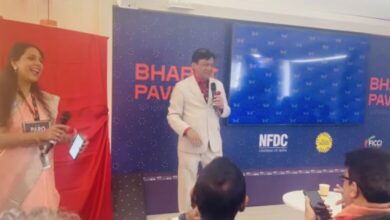
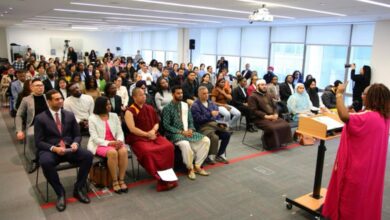
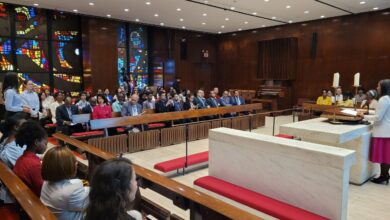
Under the theme of interfaith dialogue for global advocacy (Celebrating World Interfaith Harmony Week)
New York -Free Yemen News
A Celebration of Interfaith Dialogue for Global Advocacy
(Celebrating World Interfaith Harmony Week)
Tuesday, February 3, 2026
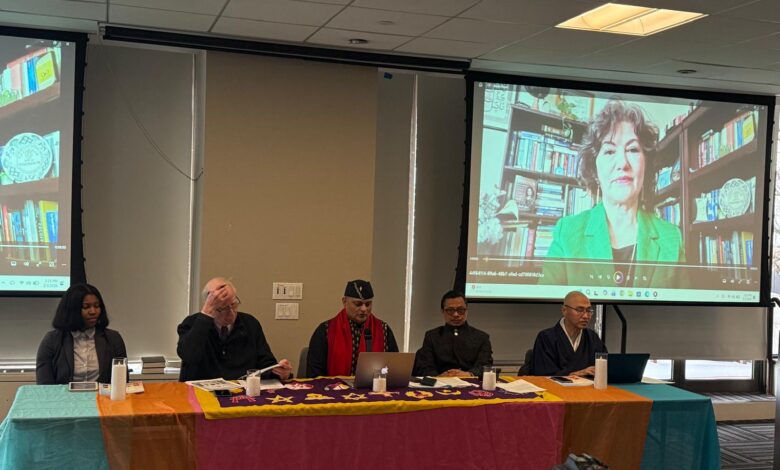
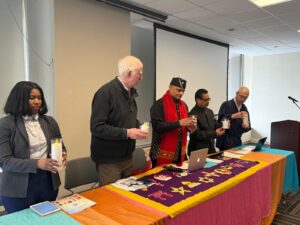
The speakers participating in the ceremony
Dr Guru Ji Modert
president
Global Yoga Community
A non-profit, tax-exempt charitable organization under Section 501(c)(3)
and a non-governmental organization
associated with the United Nations Department of Global Communications
Dr. Thomas Walsh
President and Founder of the International Peace and Leadership Organization and former President of the Universal Peace Federation
Imam Dr. Shamsi Ali
President and Founder of the Nusantara Foundation, researcher, and head of the mosque and placenta protection foundation.
Ms. Roushan Abbas
Founder and Executive Director of the Uyghur Conference
Reverend Dr. T.K. Nakaji
President and Founder of Hesa Jingen Foundation in New York
Ms. Amanda Akui
Branch Manager, HWPL Newk Bra Farm, Promoter of Peace and Dialogue
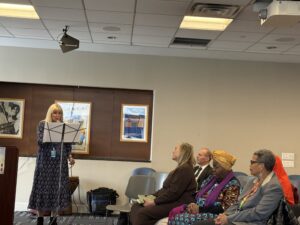
Ms. Michelle Della Fave
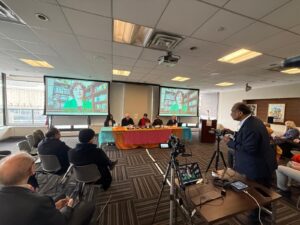
Church Center for the United Nations, Conference Room, 2nd Floor, 777 United Nations Plaza
First proposed by King Abdullah, second of Jordan and the United Nations in 2010 to promote a culture of peace and non violence. The UN General Assembly quickly after adopted this proposal through resolution a bar 65 bar five, this designating the first week of February each year as world interfaith harmony, this resolution called on governments, institutions and civil society to engage in various programs and initiatives that align with the objectives of world interfaith harmony.
This annual observance emphasizes the importance of mutual understanding and in the religious dialog as essential component of a culture of peace. It aims to foster harmony among all people, regardless of their faith. The General Assembly recognized the critical need for dialog among different faith and religions to enhance cooperation and understand it encourages all member states to promote the message of interfaith harmony and good will within such as mosques, synagogues, temples and other places of worship during this week, allowing for all Elderly participation according to individual beliefs, traditions or beliefs. Wish you all a Happy well interface harmony
Under the theme of interfaith dialogue for global advocacy (Celebrating World Interfaith Harmony Week) pic.twitter.com/ptZygPgG1O
— عين اليمن الحر (@FreeYemenEye) February 4, 2026
Under the theme of interfaith dialogue for global advocacy (Celebrating World Interfaith Harmony Week) pic.twitter.com/Xor6Gyluyu
— عين اليمن الحر (@FreeYemenEye) February 4, 2026
as we gather to observe the 29th anniversary of the bulja massacre, it is crucial to reflect thoughtfully on the events that unfolded from February 3 to fifth in 1997
during this time, the Uyghur community in gulja organized peaceful protest to express their concern over cultural and Religious repression, along with their aspirations for general autonomy.
Tragically, these peaceful demonstrations were met with severe violence from Chinese authorities, resulting in a hardware breaking, loss of life and numerous injuries.
The gulja massacre stands as a powerful reminder of the ongoing struggles faced by the Uyghur people, underscoring the necessity for dialog and understanding regarding the rights and injustices they endure.
The repercussions of these events have transcended immediate tragedy, deeply impacting families and communities while contributing to a lasting sense of trauma within the Uyghur diaspora.
In order in the memory of those who lost their lives during this difficult chapter, we must express our solidarity with the Uyghur community as they strive to secure their fundamental rights and preserve their cultural identity. This anniversary serves not only as a moment for reflection, but also as a general reminder to the international community about the importance of advocating for justice and promoting human rights for all we must learn from the past to build a future where the dignity and rights of every individual are respected and where peace and understanding can flourish.
To support the community of wel the massacre, 29th anniversary of the Gulf commemoration we all stand up now for a minute in silence.
Now, please take your candle light and light for those souls who left.
By Miss Rushan Abbasi, founder and executive director of campaign for Uyghurs and chairperson of the executive committee of the world, FYE guru Congress. She living in BC. She want to come here somehow. She has traveled to another country. So she sent me two videos. One is five minutes, one is eight minutes. So we chose eight minutes. She spoke very well,
heritage.
So hello everyone, and thank you to the organizers, faith leaders and the advocates gathered here. It is an honor to be a part of this event, but I’m so sorry that I could not join you in person this time I speak to you as a sister of someone who’s unjustly detained in my homeland for the past seven and a half years. Chinese government is conducting a full fledged active genocide against my people, the Uyghur Muslims.
Millions of Uyghurs are systematically targeted for the simple act of speaking their own language, practicing their faith and preserving a distinct culture identities that Beijing deliberately treats as threats to its absolute control.
If I describe some of the atrocious crimes committed against the Uyghurs, they include mass detention, state sponsored forced labor, state imposed forced labor, decriminalization of religious and ethnic identity, mass surveillance, transnational repression and organ harvesting. Families are shattered. Almost 1 million or equal children were sent to state one and placed to be loyal to the Chinese Communist
Party. We were women’s bodies are being the battleground of this genocide with forced sterilization, forced abortion and forced marriages with Chinese men.
Chinese government is offering these men housing, money and the jobs as incentives to bury Uyghur women. If Uyghur women refuse such forced marriages, they sent to the detention centers or subject to imprisonment and being viewed as radicalized Muslims didn’t want to marry non Muslim and Chinese.
And Chinese state media reported that 1.1 million Chinese cadres, mostly male,
it sent to Uyghur homes to monitor and supervise Uyghurs daily lives. Recent studies show that in some of the Uyghur majority areas, birth rates have dropped down to 0% because of those 10 second policies. The Chinese Embassy in Washington even tweeted proudly and celebrated those genocidal efforts, saying Uyghurs are no longer baby making machines.
And the independent UK tribunal and roughly a dozen countries and the parliaments, including United States and Canada, have concluded that these actions constitute genocide and crimes against humanity. Even a United Nations report in 2022 describe these crimes.
They just detail describe those genocidal crimes, and said China’s actions may constitute crimes against humanity.
The Chinese regime’s repression does not stop at its borders. They use kin, punishment, intimidation and the harassment to silence descent abroad. I know this pain personally. In September 2018
I spoke at the Hudson Institute, one of the think tanks here in Washington, about this mass detention of the university and outlining the fate of my in laws.
24 members of my husband’s family got
missing five days later, five days later, that the first public speech I ever participated, which was televised on YouTube. My own sister, a retired medical doctor, kind and a non political person, was taken from her home as a retaliation for my advocacy as an over American. So basically, I practices my freedom of speech, I I practice my freedom of speech, and my sister is paying the price right now, and she was sentenced 20 years on sham charges. This is how authoritarian systems function. They dehumanize individuals to instill fear in the entire community. They view compassion as witness, faith as a threat and the truth as an enemy.
In 2024 alone, 3.4 million workers were forced into government mandated factory labor feeding global supply chains, making all of us complicit when we use these products. This isn’t distant, it’s in our homes, tents, our clothes, boys and even solar panels and the batteries furniture and even the mug we drink from, or cotton we use or tomatoes in our spaghetti or our favorite seafood, the cars, the shoes, the bags all painted with Uyghur slaves, blood, sweat and tears my sister could have made the shirt on your back.
And the uncomfortable truth is, when we remain silent, we all become enablers of this genocide.
As Muslims worldwide observe Ramadan this month, we will face a cruel test of loyalty. They are forced to prove they are not fasting. Even last year, last Ramadan the Uyghurs, were forced to recording them. They forced to record themselves by eating or drinking during daylight, and they submit those footages to authorities for risk detention.
The authoritarians learn from one another and the test result of democracies everywhere, from my homeland in Tibet, Hong Kong, Southern Mongolia, Ukraine, Taiwan and beyond. Yet, events like this one that you organize your voices here remind me that moral courage still endures. Thank you. Thank you so much. Again, freedom and democracy ultimately depend on the choices we make, what we condemn, what we defend and what we choose to prioritize we spend.
Extract our world in general, and world peace in particular, as it is often said, No justice, no peace. It just simply difficult to imagine peace without commitment to justice like today, as we are talking about Uyghur people, that over 1 million Uyghurs have been detained in internment camps, which they call vocational education or training centers. They are detained without trial, due process or due process. They are forced to work in factories and farms producing goods for international markets. Their houses of worship have been destroyed, their religious practices banned, and their language and cultural identities restricted these are there are even reports of physical and psychological culture, including mass rape and force sterilization.
In addition in human family separation,
parents and children are separated. Children are taken into boarding school to bring watch them, force them to accept communist ideology. Now, ladies and gentlemen, I’ve been asked actually to talk particularly about Uyghur, but I cannot hold myself
to talk in general about the importance of justice,
oppose justice and justice and justice is against the very foundation of all religion religious teachers and values. Religion. Teach us common humanity and respect for human life. Our religions also teach us love, compassion and justice in every aspect of human life. Unfortunately, often time followers of religions and amidst all religions
demonstrate paradoxical characters,
the more conservative they are in religion, the more immoral they are in life. And I call it immoral because I do believe that the biggest immorality is violence, oppressions and injustice, even in the name of the religion, particularly in the name of the religion.
that happens? Why paradoxical characters or behaviors happens? The answer to that is because people tend to worship their symbols and affiliations rather than strengthening their spirituality, which is supposedly to be the very essence of all religions. The deeper a person in spirituality, the more loving and compassionate and just he will be or she will be. And this reminds me, actually, a verse in the Holy Quran in Islamic tradition, it challenges the people who follow scriptures. And it says, oh, people of the book, come to the common platform, common ground that worship none but God. In other words, do not worship affiliations. Do not worship your ego. Instead worship God that we believe in. And God is God. All be as people of religion. It is morally obligated to stand to speak out and speak out against injustice, because, once again, an injustice to any is an injustice to all. An attack to anyone is an attack to everyone. So let me end with this.
The conclusion also, I’d like to add
on the importance of
being honest to our stance on justice, and what does it mean? What point I would like to underline here, I want to remind all of us to be honest that justice is for all. Justice is not for certain people based on race or ethnicities, or national backgrounds or religious backgrounds, it is for all when oppression and violence is perpetrated upon some, we must all speak up and speak out against it, as it is said, enough for evil to thrive when good people do or say nothing. Thank you very much.
Events too, live in different places. Even we had a Muslim party. I think I am the only Hindu in the party. So we don’t have any conflict. We walk together. You know, this is a friendship, supposedly. So now I want to invite for a keynote address by Dr Thomas wash. I know him before I came to America because I used to see magazine and newsletter in India. So he’s always there, and him and his wife, they always promote peace, go to different countries, organize International Programs, always at the UN long time. And he’s the president and co founder of the SJ international graduate school of peace and public leadership. And he is the lifelong peace activist, interfaith activist, promoter. I think even if he’s sleeping, he just thinks about peace the floor is for you.
Thank you for that. I hope I can live up to 50% of that kind introduction. Anyway, it’s great to be here, and thank you for allowing me to be part of this wonderful panel. And with this distinguished audience. I’m very happy to meet once again, my good friend, Yemen. Dr, Shamsi Ali, and to meet Ms Amanda and reverend. Dr, I want
to pronounce correctly. And
thank you for coming on this cold, cold day. So Religion is a fascinating field,
life experience, human experience, and it’s.
Been with us throughout the ages, going back millennia. And they talk about, for example, the scholars of religion, something called the Axial Age, back around four or 500 years before the Common Era. So more than 2500 years ago, Buddhism gave birth out of Hinduism Foundation, Rabbinic Judaism was first kind of developing, and you had the philosophers Socrates and Plato that also had very spiritual ideas that there was some great moment in history. So our religions have profoundly impacted civilization. Many argue there’s a serious threat to religion. I think part of our effort to build unity with each other across religious boundaries. Think that effort is to be concerned about one another and the various crises and trials that are being faced by particularly minority religions, newer religions, etc. And I think it’s exacerbated by this trend that we’re experiencing now toward more authoritarian systems and more populist systems. So I think we’re going to face this more and more, and I we’re talking about China, but we could look at India and Russia and certain parts of the Islamic world and find problematic. China is unique, and then it’s very, very systematic. They have super advanced surveillance systems operating everywhere, so it further exacerbates this problem.
but I wanted to say those, those few words to contribute hopefully to this important discussion. Thank you,
of the Havoc peace and reconciliation foundation of New York being and he’s doing So many peace events and interfaith events. And I always
Hello. Good afternoon everyone, and thank you very much for I guess, first of all, give me this opportunity to share. And because of nowadays, I’m really not good at using the computer. I know that Guruji sent me something, so I try to go back to where I couldn’t find it. So those things happens, I don’t know, sometimes I feel like nowadays, everything is so convenient, but then too convenient, so it takes, you know, more inconvenient for me. So that was happening here for me, too. So it’s like a wall is getting so sophisticated. That’s why it becomes so in sophisticated in one way, you know, because we can’t talk, we can just have to use the computer, everything, even like a walls, that everything is too you have to push the button or something. You don’t know who they are, we’re fighting and so forth. There are many parts like that too. But anyway, so the world, you know how many weeks? So I just wanted to, yeah, acknowledge these efforts to try to bring it all together, which is very important. And so I’m very glad that. So we are here. And then also people attending is very fun. And for me, also, interface is something that I’ve been working on, and as I always have, us think of possible to work together. Actually, myself is from Japan originally. So Japan is something, maybe something different from the United States and so forth. Because even, like this morning, the news talking about how good we are that you know, not too many people are killed during this time of the winter. But then the this is very weird for me, because in Japan, nobody killed in a year. So now we’re proud of that. We don’t have to keep 20% decrease of the killing, you know. The murder and so forth. But then so very weird thing is, what is the standard? My standard is no killing is totally standard. You can walk yourself and then you don’t get buggery or anything. And even, like this time, last time. I mean, last month, I was in Japan, so I left my hat in a train. So here, of course, I mean, it’s going to be garbage or anything like that. And then I asked my my sister, to go. And then, of course, they have it that my hat will be back when I go to Japan, because she already have it. So one thing is like, you know, the revision itself, or justice and, you know, the fighting, everything is a common here, but not necessarily everyone. So, you know that standard itself is one thing that I feel very, very different has to be standard for the interface for me is to be able to somehow respect our own traditions, but then at the same time in a history, I mean, we said that something, you know, so Many walls, everything going on in our society now, but it has been with the human being. So nothing new in my own way. For me, it’s nothing new always. There’s a fight, there’s always other killing, there’s always all those things, and then that, do we, you know, improve? I think the improvement is something that we need to do because, you know, like, oh, we know the truth. We can, you know, solve this problem. That’s a problematic too for me. If there’s, I mean, everything is like, right and wrong. And of course, Japanese tend to be always not right, not wrong. So it’s we stand on the middle of the good and bad. So because, you know, each one, because otherwise, this group, for the people, is bad, this group is good, but then so, but then the thing is, each one has a good part and bad part, or, you know, we have weak point and good point. And the revision is the same way too, as if the one religion knows everything and then don’t accept any other things, is wrong, too. The government do the same thing, but the religion do the same thing, right? So how many you know the religious fight? You know the wars justified war. How can it be possible to justify the war, but then the you can based upon the religious traditions too. So do we ask that questions? Maybe not, as if my religion is doing okay, well, good. So, but at the same time, that attitude itself is bad for me, so I’m not perfect, because human, the we are human is not very, you know, as if the you know that Bible justify you whatever you do. But that’s not really true, because everybody interpret their own way. So some people, depending upon the how much of the understanding, you know, everything is all different. So by so, so for me, the point is no reflection of our own part is maybe something. So we need to really see how what we can do together, but in the, in my opinion, right now, so interface also means to be able to what do you call it? Not to yourself. I mean, I know that each tradition has a good thing, each tradition has a piece. But then the thing is, when they face to the other community, other people, that has been the problem, because that’s, you know, how you see that, if you are, you know, Buddhist, and how you see the who are not Buddhist, if you’re Muslim, then how you see the other people who are not Muslim? And if you’re Christian, if you follow them, if you don’t follow the Christianity, what do they feel? And then how do they treat others? So that has been the problem. So that focus is not you know, each one has a peace, but yet, we don’t always necessarily create a peaceful world together. So we always fight each other. I’m better than the others, so that the comparison and all those things seems to me a big problem. So Chinese, I mean, of course, China is the one part that we talk about, but nothing that new. We have been doing that society like that too, right before the World War Two. That’s the society we are living. Is not the much of difference of the Chinese people, Chinese government is this way, or American government is this way. Those are, of course, this way. But yet at the same time. And you know, those are nothing, I don’t know, nothing new in the history, at least. So, so again, the so that how to respect the others is a other culture, other than yourself, like, if it’s, you know, among the Chinese, of course there’s a against the revisions. Then how the challenge should be government, how they can find the value of the religions, and then also how you can work together with them. So instead of, you know this is right thing, that this is wrong or something, so, so what? What is the possible thing to be able to.